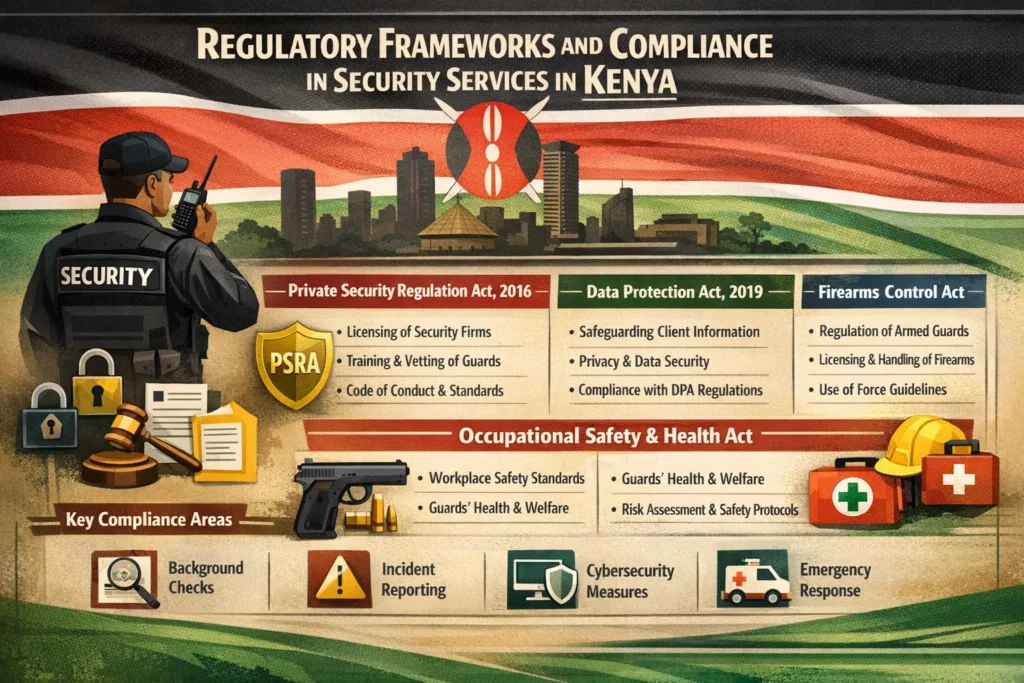
The private security industry has grown exponentially over the years, becoming a critical pillar in the nation’s safety and security infrastructure. From providing on-site guarding for businesses and residences to advanced surveillance solutions, private security firms have stepped up to complement public security forces. However, this rapid growth has also brought the need for a well-defined regulatory framework to ensure professionalism, accountability, and compliance within the industry.
The Importance of Regulation in the Security Industry
Regulation is essential in the private security sector because it helps establish standards that companies must follow in order to operate effectively and ethically. Without proper regulation, the industry could face challenges such as untrained personnel, misuse of authority, or lack of accountability.
A strong regulatory environment ensures that security companies maintain high standards of professionalism, employ qualified personnel, and adhere to legal requirements. This ultimately protects both the clients who hire security services and the communities in which these services operate.
Key Regulatory Bodies and Legal Frameworks
In Kenya, the private security sector is governed by various laws and regulatory bodies that oversee licensing, operations, and compliance. These frameworks are designed to ensure that security firms operate within the law and meet the required professional standards.
One of the most significant legal frameworks is the Private Security Regulation Act, which establishes guidelines for the registration, licensing, and oversight of private security providers. The Act mandates that security companies comply with specific operational standards and that security personnel meet certain qualifications before they are allowed to work in the industry.
Licensing and Certification
For a security company to operate legally in Kenya, it must obtain the necessary licenses and certifications from the relevant regulatory authorities. Licensing ensures that the company has met all required standards related to training, personnel vetting, and operational procedures.
Security personnel are also expected to undergo proper training and background checks before they are deployed in the field. These measures help guarantee that only qualified individuals are entrusted with the responsibility of protecting people and property.
Compliance and Ethical Standards
Compliance goes beyond simply obtaining licenses. Security firms must also adhere to ethical standards and best practices that guide their daily operations. These include maintaining professional conduct, respecting human rights, and ensuring that security personnel operate within the limits of the law.
Adhering to ethical standards also helps build trust between security providers and the communities they serve.
Challenges in Regulatory Compliance
Despite the existence of regulatory frameworks, the private security industry still faces several challenges when it comes to compliance. These may include:
-
Lack of awareness about regulatory requirements
-
Limited enforcement of existing laws
-
Rapid growth of the industry leading to oversight challenges
-
Variations in training and operational standards
Addressing these challenges requires cooperation between regulatory authorities, security companies, and other stakeholders to strengthen compliance and improve oversight.
The Role of Security Companies
Security companies themselves play a crucial role in ensuring regulatory compliance. By investing in proper training, adhering to industry guidelines, and maintaining transparency in their operations, security firms can contribute to raising the standards of the entire industry.
Companies that prioritize compliance not only protect their clients effectively but also enhance their reputation and credibility within the market.
Conclusion
Regulatory frameworks and compliance mechanisms are essential for the sustainable growth of the private security industry in Kenya. By ensuring that companies operate within clearly defined legal and ethical boundaries, these frameworks help promote professionalism, accountability, and public trust.
As the demand for private security services continues to grow, adherence to regulatory standards will remain a key factor in maintaining a safe and secure environment for businesses, institutions, and communities across the country.
Hi, this is a comment.
To get started with moderating, editing, and deleting comments, please visit the Comments screen in the dashboard.
Commenter avatars come from Gravatar.